Aluminum Engine Components
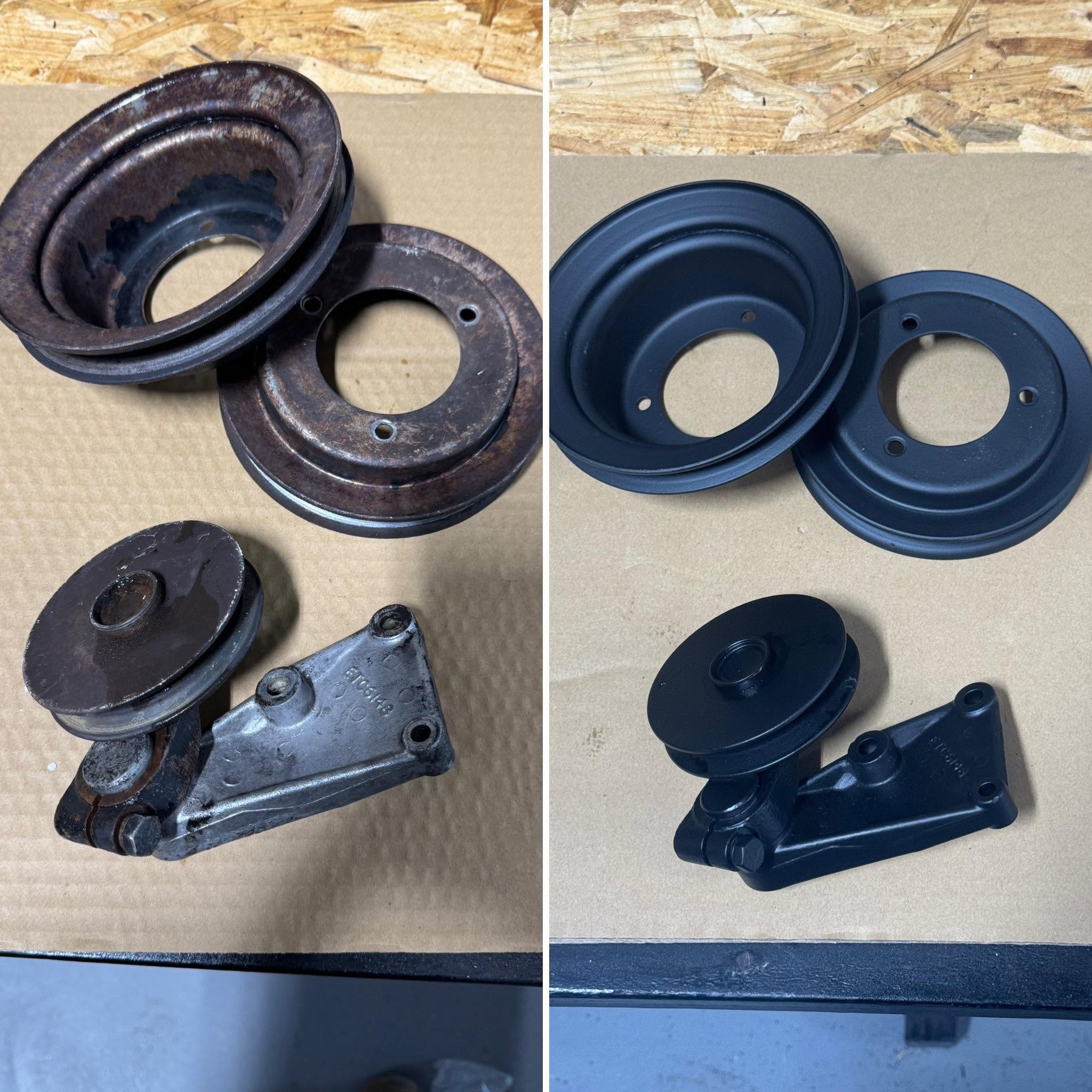
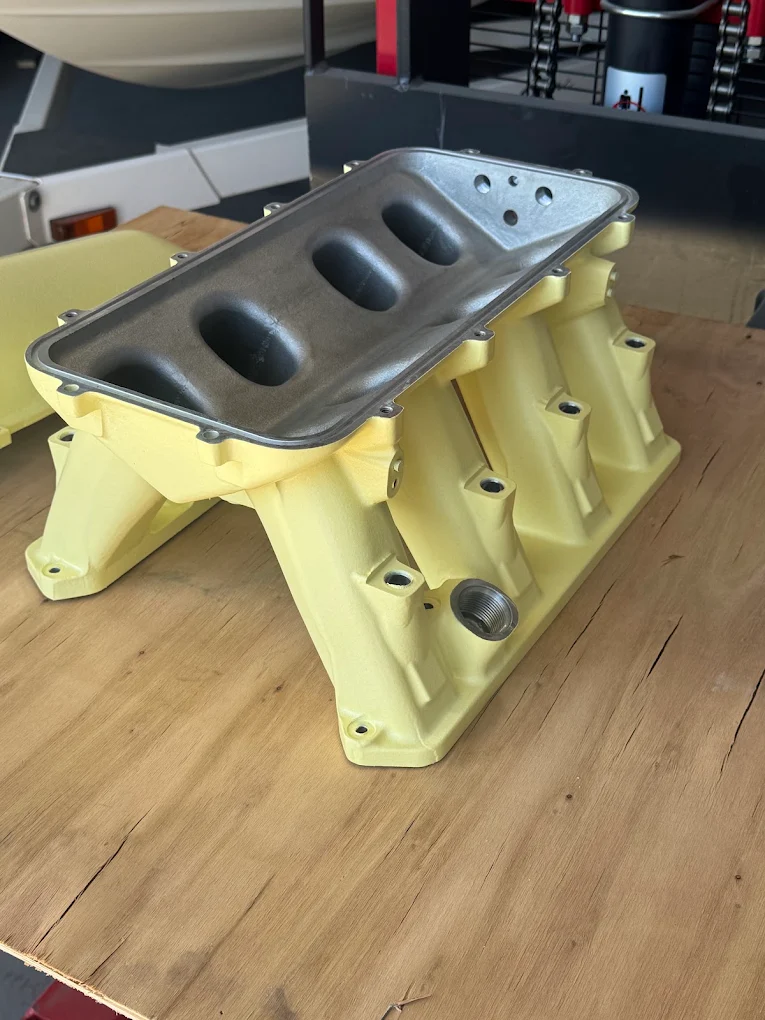
Intakes, valve covers, timing covers, carburetor bodies and housings cleaned up without pitting the alloy.
Not every part wants a full abrasive assault. We match the media to the metal — stripping coatings off aluminum, sheet metal and detailed castings for Carson City customers without eating what's underneath.
 Media Blasting
"Media blasting" is the broader family that sandblasting belongs to — the difference is that the abrasive itself becomes a variable. Change the media and you change the outcome completely: soda strips coatings without touching the metal, glass bead leaves a soft satin finish, aluminum oxide cuts hard and fast, plastic media lifts paint off panels that would buckle under anything harsher.
That matters on parts where a heavy-handed job is worse than no job at all. Aluminum intakes, carburetor bodies, sheet metal panels, thin castings, antique hardware and anything with fine detail you're trying to preserve all call for a lighter touch and a different abrasive.
We pick the media by looking at the part: what alloy it is, how thick, what's coming off, and what has to happen to it next. It's a slower conversation than "put it in the cabinet," and it's the reason delicate work comes back looking right.
Carson City is home. The shop sits at 7883 South St., a couple of minutes from anywhere in town, which means you can stop in, look at colors in person and talk the job through with the people who'll actually be doing the work. Carson City is a small Montcalm County town where word of mouth still does most of the advertising — which is a good reason to make sure every part that leaves the shop is right. We see aluminum castings, sheet metal panels and engine components come through from all over Montcalm County — and a good share of it walks in the door rather than getting shipped.
Hard abrasive at high pressure on thin aluminum will warp it, round off crisp casting detail and open up porosity. Once that's done there's no undoing it — which is why we'd rather test a corner first than guess.
The jobs where control matters more than raw speed.
Intakes, valve covers, timing covers, carburetor bodies and housings cleaned up without pitting the alloy.
Thin panels stripped with a gentler media and lower pressure so they come back flat instead of oil-canned.
Cast pieces with lettering, ribs or fine detail cleaned without softening the edges that make them worth keeping.
Peeling clear coat and old finish removed from alloy faces and barrels ahead of a fresh coating.
Cases, covers, brackets and hardware brought back to a clean, even surface ready to coat or polish.
Old iron and brass work stripped back carefully when a piece has more value original than perfect.
Glass bead peening for an even satin texture — a finished look in its own right on the right part.
The setup pass before powder coating on any part too delicate for aggressive abrasive.
The media gets chosen before anything gets blasted.
Steel, aluminum, cast iron, pot metal or brass — each behaves differently under abrasive, and thickness matters as much as alloy.
Soda, glass bead, fine abrasive or plastic media, selected for what's coming off and what has to survive underneath it.
On anything unusual or valuable we prove out the media and pressure on an inconspicuous spot before committing to the whole part.
Consistent distance, angle and pressure across the surface so the finish is even end to end — not stripped in one place and scoured in another.
Residue and media get cleared out of every passage and pocket, and soda-blasted parts are washed so nothing interferes with the coating.
Straight into prep and masking if we're finishing it, or wrapped and ready if it's going home bare.
Soda blasting is aggressive on paint and almost inert on the substrate. On thin or valuable parts that gap between "coating gone" and "metal damaged" is the whole game.
Casting numbers, lettering, machined edges and stampings stay crisp when the media is matched to the part instead of overwhelming it.
Glass bead leaves a uniform satin texture that plenty of customers want as the final look — no coating required.
Lower-energy media puts less heat and impact into thin panels, which is what keeps them from warping while they're being stripped.
Being in Carson City means you can drop parts off, look at colors on the bench and see the work in progress — all within a few minutes of anywhere in town. Questions get answered face to face instead of over a ticket number.
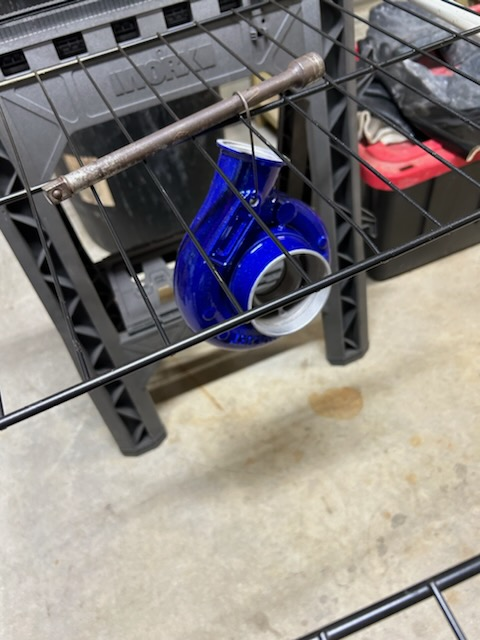
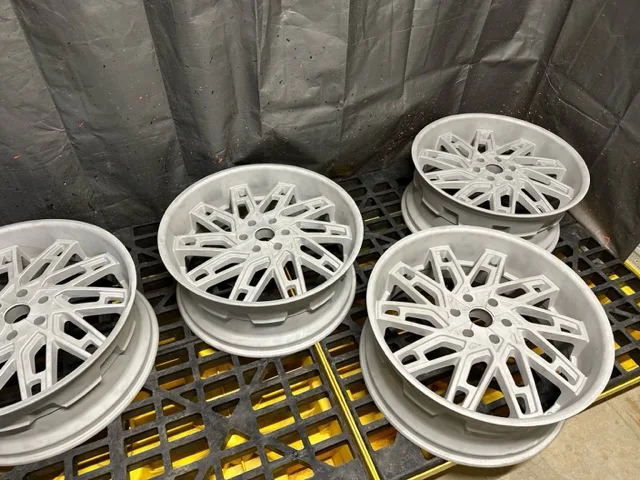
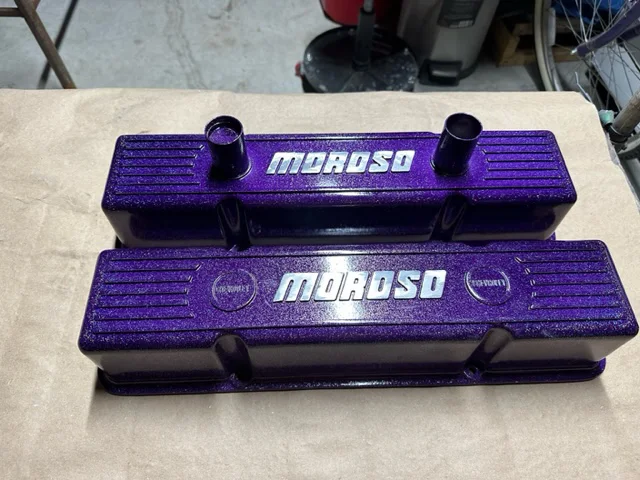
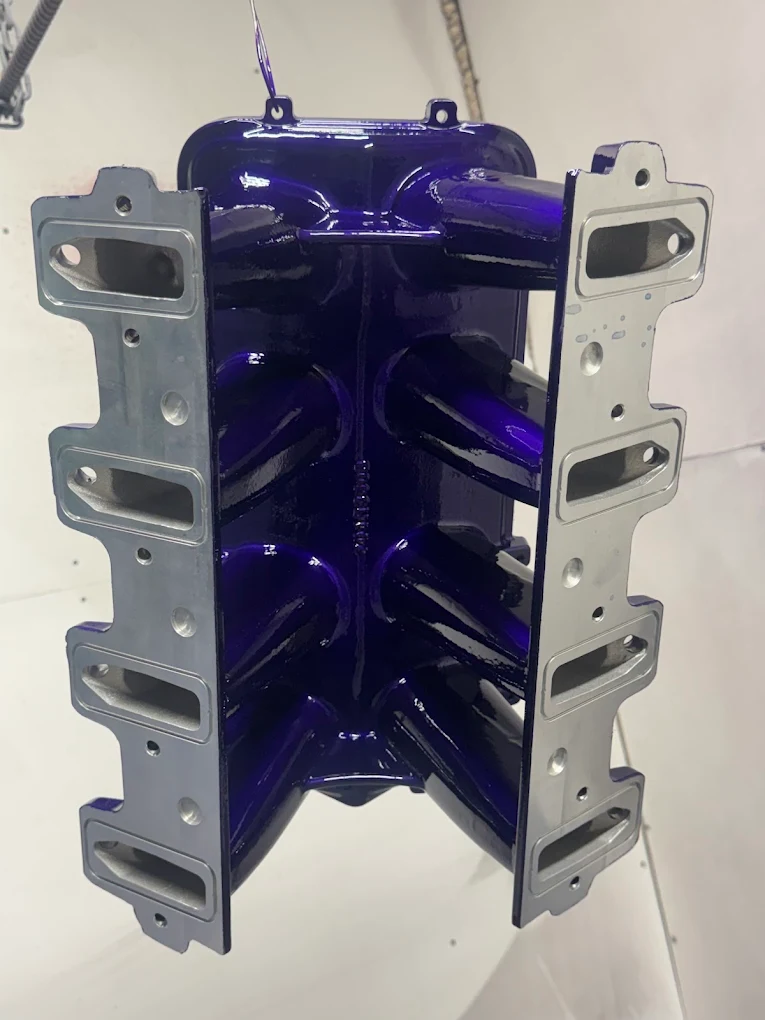
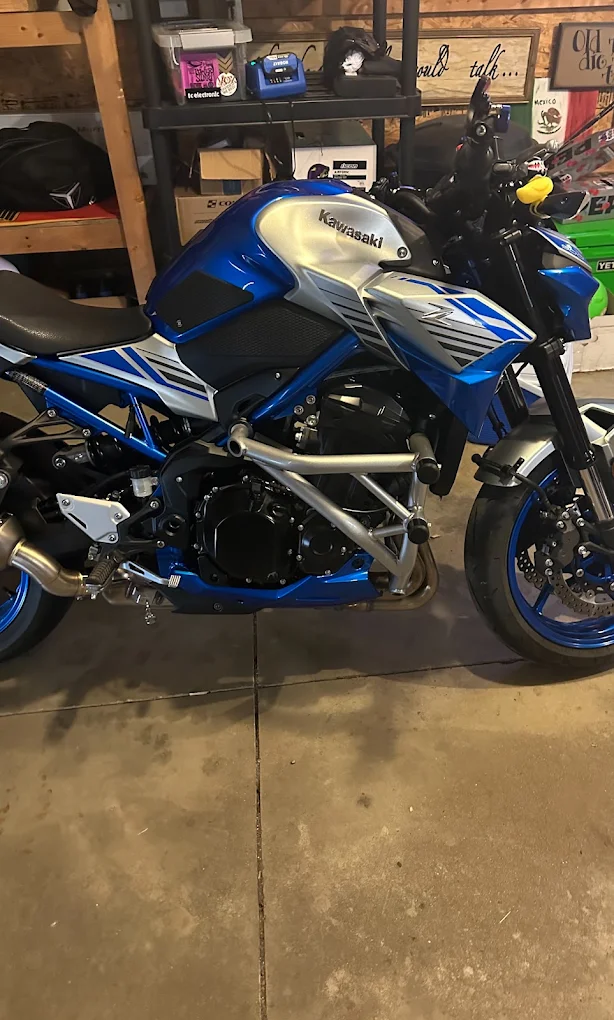
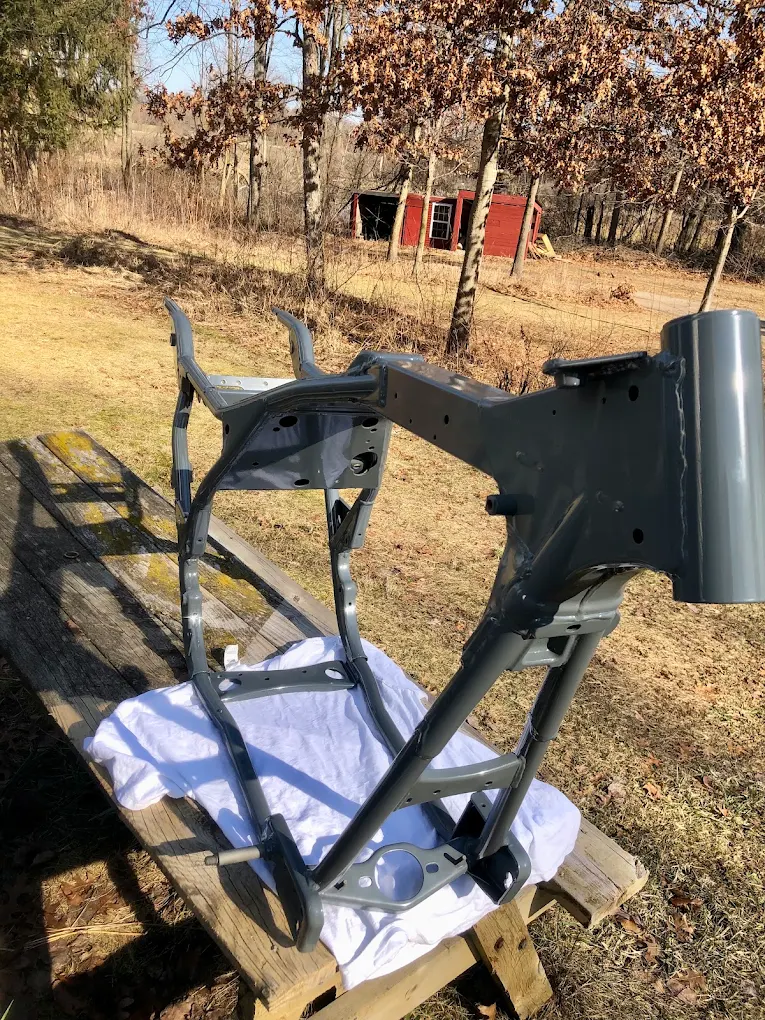
Recent work out of the Carson City shop — see more on Facebook.
Sandblasted a cast iron radiator for me. Did a great job. Looks fantastic, and a fair price. Highly recommend.
I've had these guys do a ton of work for me lately and they hands down have the best customer service and quality out of any powder coating company I've ever used. They are my new go to for any powder coating needs! They truly care about their work!
Straight answers to what customers ask us most. Anything not covered here, just call the shop.
We're at 7883 South St., Carson City, MI 48811, open every day from 6:00 AM to 8:00 PM. Call or text 989-289-2298 before you head over and we'll make sure someone's ready to look at your parts when you pull in.
Directly. Nightmare Coating is veteran-owned and family-operated — when you call, you're talking to John or his son, the people who will actually be blasting, prepping and coating your parts. Nothing gets subcontracted out of Carson City.
Sandblasting is one type of media blasting — the aggressive end of it. Media blasting describes the whole approach, where the abrasive is chosen for the job: soda for stripping paint without touching metal, glass bead for satin finishes, fine abrasives for delicate work. Same equipment, very different results.
With the right media and pressure, yes — it's one of the main reasons to media blast instead of sandblast. Aluminum is soft and thin sections warp easily, so we drop the pressure and use a gentler abrasive. Full-pressure hard abrasive on aluminum is how parts get ruined.
That's what soda is for. Sodium bicarbonate is soft enough to break apart on impact and lift the coating without cutting into the substrate underneath. It's ideal when the metal, plating or detail beneath the paint needs to be preserved exactly as it is.
Yes. Cured powder is tough, so it usually needs a more aggressive abrasive than soda — but stripping old powder coat before recoating is routine work for us. Tell us what's on there and we'll pick the media that takes it off cleanly.
Steel does — bare steel flash rusts quickly, so it needs a coating, primer or oil. Aluminum and stainless can be left with the bead-blast finish as the final look, and a lot of customers do exactly that.
Disassemble as far as you reasonably can and pull anything that shouldn't be blasted — bearings, seals, rubber, wiring, glass and any plating you want kept. Drain fluids and knock off heavy grease if you can. If a part can't be fully stripped, bring it in and we'll mask what needs protecting.
The shop is at 7883 South St. right here in Carson City, and we pull work from every town around it.
Same shop, same standard — pick the town closest to you.
One shop, the whole cycle — so nothing gets handed off halfway through.
Tell us what you're bringing in and we'll get you a quote — no runaround.
Drop us the details on your project and we'll get right back to you. Prefer to talk it through? Give the shop a call.