Headers & Exhaust Manifolds
Tube headers and cast manifolds coated to hold color and stop the rust that starts the first wet week.
Headers, manifolds, turbo housings and brake components from Ithaca and across Mid-Michigan — coated in finishes engineered to hold color and fight corrosion at temperatures that destroy ordinary paint.
 High-Heat Coatings

Standard powder is a great finish right up until you bolt it to something that glows. Exhaust components, manifolds and brake parts cycle through temperature ranges that discolor, chalk and eventually burn off a normal coating — which is why high-heat formulations exist as a separate family of products.
These coatings are built around resin systems that stay stable at elevated temperature. They hold their color, resist the corrosion that heat cycling accelerates, and stop the rust bloom that turns bare headers orange within a season of Michigan weather.
The other half of the job is prep, and heat-exposed parts are the hardest kind. Baked-on oil, carbon, exhaust residue and heat scale all have to come out of the metal before anything goes on. We blast and degas parts properly — because a high-heat coating over contaminated metal fails just as fast as the paint it replaced.
Ithaca is about 17 miles east of the shop, roughly 25 minutes door to door. Ithaca is the Gratiot County seat, a farming community sitting right on US-127 in the middle of some of the best agricultural ground in the state — which means a steady supply of equipment that's earned a fresh finish. We get a steady stream of headers, manifolds, brake calipers and stove parts from Ithaca and the surrounding Gratiot County towns, and most of those customers make the drive because there isn't another shop nearby running blasting, prep, coating and curing under one roof. Call ahead on 989-289-2298 and we'll have a quote ready before you load up.
Cast iron and used headers hold oil and carbon deep in the metal's pores. Heat them and that contamination gases out through the fresh coating as bubbles and pinholes. Blasting plus a pre-bake pulls it out first — skip it and the finish is compromised before it ever gets installed.
Anything that runs hot and still has to look right.
Tube headers and cast manifolds coated to hold color and stop the rust that starts the first wet week.
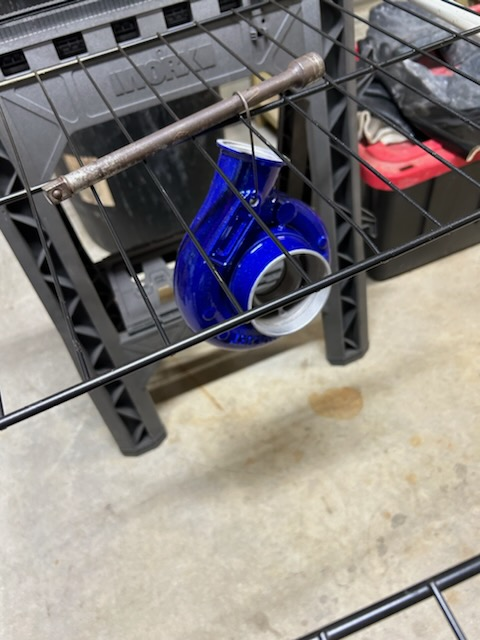
Turbine housings, downpipe flanges and hot-side hardware finished for high sustained temperature.
Calipers, brackets and dust shields coated to survive brake heat and look good behind an open wheel.
Pipes, heat shields and mufflers coated in satin and gloss blacks that hold up to sustained heat.
Blocks, cases, pans and covers finished for engine bay temperatures and easy cleaning.
Stove bodies, doors, fire pits, grill parts and fireplace hardware coated for direct heat exposure.
Equipment housings, ovens, guarding and machinery parts that live near a heat source in service.
Shields, brackets and guards coated for the temperatures they actually see rather than the ones a spec sheet assumes.
The prep is more demanding — that's what makes the finish last.
What the part is, how hot it actually runs and how it's exposed determines which coating family is appropriate.
Heat scale, rust, carbon and old coatings are blasted away completely — bare, clean metal is the only acceptable starting point.
Previously run exhaust and cast components get heat-cycled to drive out absorbed oil and carbon before coating, so it can't gas through the finish later.
Flange faces, threads, sensor bungs, gasket surfaces and mounting points are cleaned and masked by hand.
A heat-rated coating is applied at an even film build — too heavy is as much of a problem as too thin on hot parts.
Full oven cure, then we tell you whether the coating needs a post-install heat cycle to reach its final properties.
Bare and painted headers rust fast in Michigan — heat drives off moisture, then condensation brings it right back. A heat-rated coating breaks that cycle.
Ordinary paint on a hot part discolors, chalks and flakes within a season. These coatings are formulated to keep their appearance through repeated heat cycling.
A hard cured surface sheds road grime, oil and brake dust much better than bare cast iron or scorched paint — a real difference on visible engine bay and brake parts.
Blasting and degassing used parts is the step most people skip. It's the difference between a coating that lasts and one that bubbles the first time you drive it.
Ithaca is a fraction of the drive to Grand Rapids or Lansing, and you're dealing with the same veteran-owned, family-run shop from quote to pickup. Blasting through curing all happens in one building — your parts never leave Gratiot County's back yard mid-job.
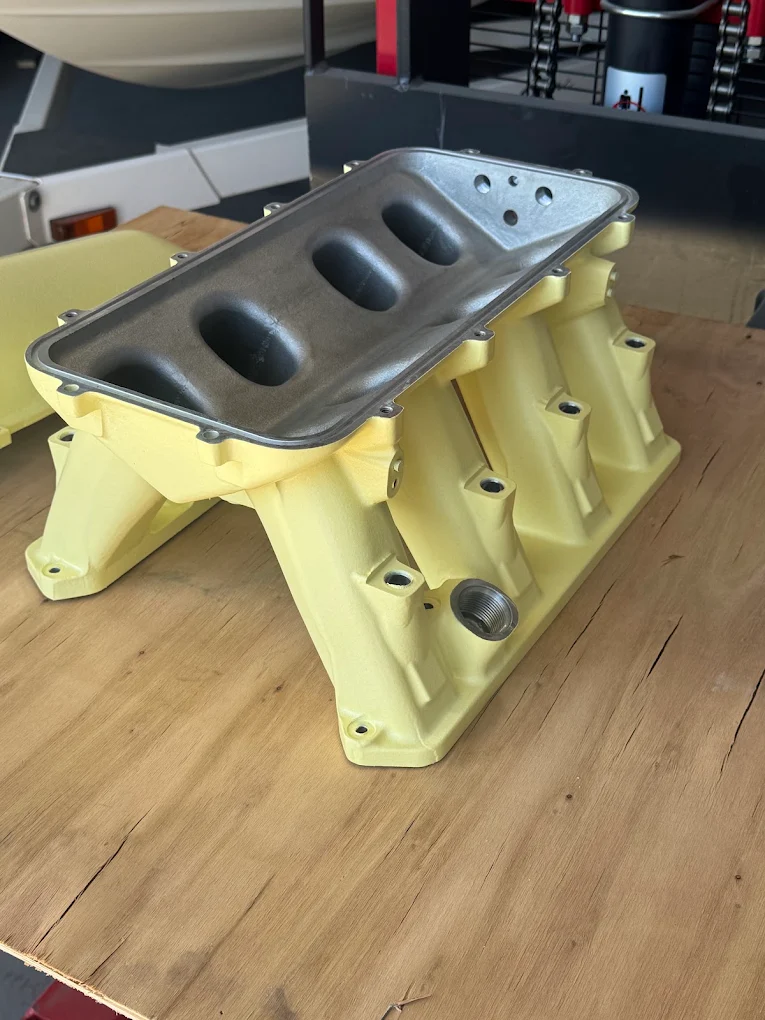
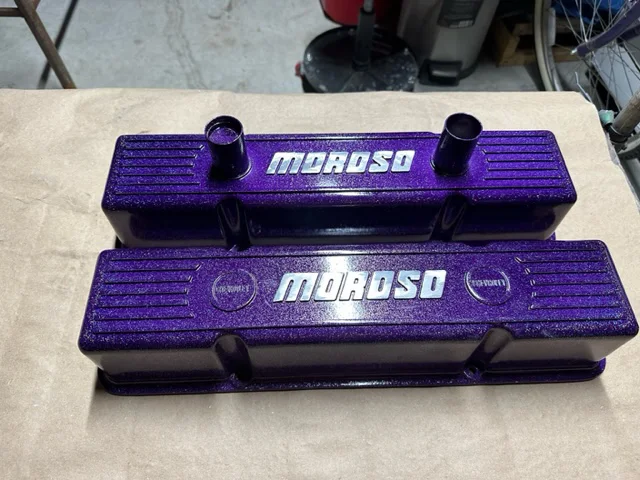
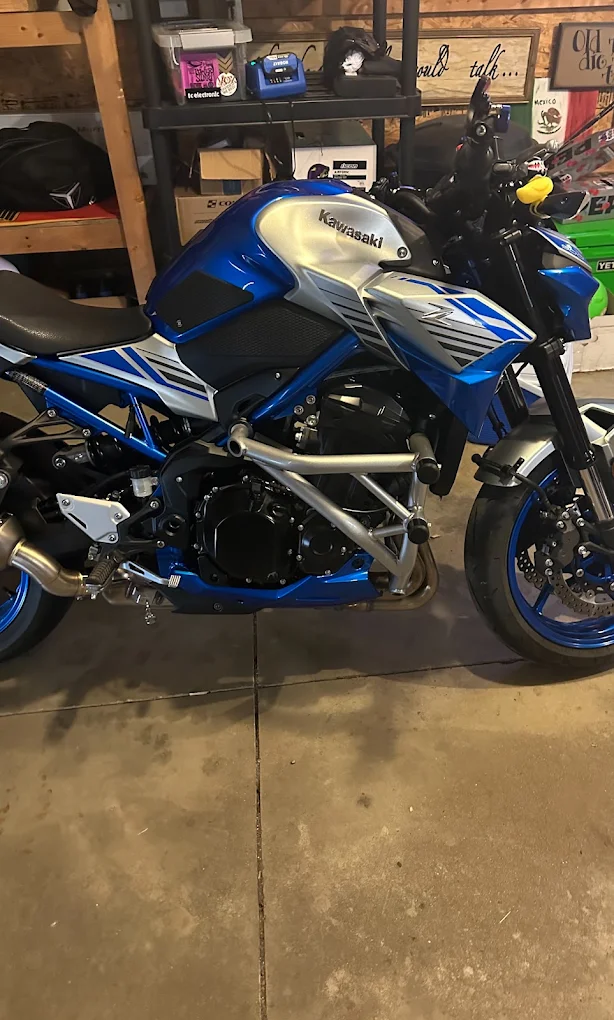
Recent work out of the Carson City shop — see more on Facebook.
These guys are fantastic! They stripped and powder coated the crash bars for my motorcycle within a couple days and they look great! Very reasonable pricing, very responsive, accommodating, and friendly.
I've had these guys do a ton of work for me lately and they hands down have the best customer service and quality out of any powder coating company I've ever used. They are my new go to for any powder coating needs! They truly care about their work!
Straight answers to what customers ask us most. Anything not covered here, just call the shop.
Yes. Our shop is at 7883 South St. in Carson City, about 17 miles east of Ithaca — roughly 25 minutes door to door. Customers from Ithaca and across Gratiot County bring us headers, manifolds, brake calipers and stove parts regularly. Call or text 989-289-2298 and we'll quote the job before you make the drive.
About 17 miles east, which is about 25 minutes of driving depending on where in Ithaca you start. We're open every day from 6:00 AM to 8:00 PM, so a drop-off is easy to fit around work.
It depends on the specific product — heat-rated powders cover a wide range, and the right one depends on whether you're coating a valve cover, a brake caliper or a set of headers. Tell us the part and how hot it runs and we'll match the coating to it.
Yes, but used exhaust needs extra work. Oil and carbon soak into the metal and gas out through a fresh coating when it heats up, causing bubbles and pinholes. We blast and heat-cycle used parts first to drive that contamination out before coating.
Not if the coating is matched to the temperature the part actually sees. Problems come from using standard powder on a hot part, or a heat-rated coating on something running well past its range. That's why we ask about the application before quoting.
Calipers are common work here. They need to be fully disassembled with seals, pistons and any rubber removed before they go in the oven, and the mating and sealing surfaces get masked. Bring them apart and cleaned if you can.
They're different tools. Ceramic coatings are aimed at thermal barrier performance on very hot exhaust; high-heat powder is aimed at appearance and corrosion protection with good heat stability. For most street builds, headers and engine bay parts, powder gives you a durable finish that holds its color.
Some high-heat products reach their final hardness after an initial heat cycle in service. If that applies to what we've used on your parts, we'll tell you exactly how to do it when you pick up.
We're at 7883 South St. in Carson City, about 17 miles east of Ithaca — about 25 minutes, and an easy run from anywhere in Gratiot County.
Same shop, same standard — pick the town closest to you.
One shop, the whole cycle — so nothing gets handed off halfway through.
Tell us what you're bringing in and we'll get you a quote — no runaround.
Drop us the details on your project and we'll get right back to you. Prefer to talk it through? Give the shop a call.